LAW OFFICE OF CHRISTIE ASSELIN

estate plan with christie blog/vlog

  • Home
  • Podcast Episodes
  • Estate Planning
  • Trust Administration
  • Probate
  • FAQs
  • About
  • Contact
  • Blog
  • Accessibility

6/8/2022

Probate Meeting #1

Read Now
 
After you have signed the attorney-client contract, it is time for us to meet for the first time.  Prior to our meeting, please securely upload the following to your Clio account. Not all of these documents will apply to your case. If the request does not apply, simply ignore the request.

If you are unable to scan these documents and upload them, please let me know. 

Please upload the following documents prior to our initial meeting - request documents:
1. All original wills and codicils (if estate plan not prepared by our office).
2. All original trusts and amendments established by decedent (if estate plan not prepared by our office).
3. Most recent bank statements for accounts on which decedent's name appears as either sole or co-owner in any capacity and copy of signature card for each account. Copies of monthly statements.
4. All passbooks and savings certificates on which decedent's name appears.
5. Most recent statements for all mutual fund and stock brokerage accounts. Copies of monthly statements.
6. Certified copies of death certificate if available (no less than 5 copies).
In addition, the following information and documents will also be needed, but need not be brought to the initial meeting unless readily available:
1. All IRA and qualified pension benefit documents, including beneficiary designation forms and plan descriptions.
2. Certificates of title ("pink slips") for all automobiles, recreational vehicles, boats, trailers, motorcycles, and airplanes in which decedent had any ownership interest.
3. All life insurance policies and annuity contracts, including beneficiary designation forms.
4. All deeds to real property in which decedent had any interest and copies of any notes or deeds of trust to which such properties are subject.  If you do not have a copy of the deed, please supply me with the address. 
5. All leases for all real property on which decedent was either the landlord or tenant.
6. Most recent personal income tax return.
7. Copies of all gift, estate, and/or generation-skipping transfer tax returns ever filed by decedent or decedent's spouse at any time in the past.
8. Most recent financial statements and tax returns for any partnership or other closely held business.
9. Copies of any partnership agreements, buy-sell agreements, and corporate records for any partnership or closely held corporation.
10. A list of tangible personal property items that, individually or as a group or collection, have a fair market value in excess of $3000 (e.g., jewelry, art, antiques, or coin, stamp, book, gun, or wine collections).
11. Copies of all bills for expenses of last illness, such as hospital and doctor bills, and an itemized list of all funeral and related expenses.
12. A list of any known debts, liabilities, pending lawsuits, or other claims of or against decedent.
13. Copies of any trust of which decedent was a trustee or beneficiary at the time of death.
14. A list of all safe deposit boxes on which decedent's name appears, by bank and branch, and an inventory of the contents of each.
15. All deeds of trust, notes, or accounts receivable representing payments owed to decedent.  
16. All stock certificates, bonds, or other securities.
17. Any other documents that you believe may be important to our understanding of decedent's personal and financial affairs.
If you have any questions or if any of this information or documentation is not available by the time set for your appointment, we can discuss this at the time of the appointment. Time is of the essence in these matters, and we would prefer not to delay just because a particular document is not available.


Share

6/2/2022

Checklist – Preparation For Probate Petition And Hearing

Read Now
 
Checklist – Preparation For Probate Petition And Hearing

  1. Locate and Contact Heirs and Beneficiaries.  A petitioner must notify the heirs and beneficiaries of the probate petition.  The standard is to make a reasonable effort to do so.  This includes names, addresses, and relations of the heirs at law and the will beneficiaries.  Heirs and beneficiaries have the right to challenge a will.  So, they must receive notice.
  2. Characterize the assets – which assets are subject to probate?  Are there any assets NOT subject to probate that may pass as a matter of law?
 
 
Assets Not Subject To Probate:
  • Community property assets that pass to surviving spouse or registered domestic partner.
  • Assets held as joint tenancy.
  • Assets with beneficiary designations such as retirement accounts, life insurance policies, annuities, and payable on death bank accounts.
  • Trust assets.
  • Life estates. 
Assets Subject To Probate:
  • Although the list above is not exhaustive, it’s close.  And, assets not listed above most likely are subject to probate. 

  1. Are any summary proceedings available?  Summary proceedings are more straightforward and less time-consuming than an entire probate proceeding.  These are excellent remedies when the value of the estate is small, there will be no adverse tax consequences, the number of successors in interest to the decedent's assets is minimal, the decedent had few or no debts or liabilities, and there are no disputes about entitlement to the property.  There are five types of summary proceedings:
    1. Collection of personal property in small estates by affidavit or declaration under Prob C §§13100–13116;
    2. Succession to real property within California by one of the following two methods, depending on the gross value of all California real property in the estate:
      1. If real property gross fair market value is under $55,425 or
      2. If real property gross fair market value is over $55,425 and the total estate value does not exceed $166,250, a summary court proceeding to determine succession to real property and any additional personal property under Proc. C. §§ 13150-13158.
    3. Transfer to surviving spouse, registered domestic partner, minor child, or another dependent:
      1. Setting aside small estate. Prob C §§6600–6615
      2. Passing property to a surviving spouse or registered domestic partner.  Prob C §§13500–13554.
      3. Determining and confirming by court order property passing to a surviving spouse or registered domestic partner. Prob C §§13650–13660.
  2. Can you file a Heggstad Petition?  A Heggstad Petition is a remedy used to avoid a full probate administration.  Under California Probate Code 850, a trustee or beneficiary can request that the court order that property not correctly titled in the decedent’s trust be considered a trust asset.  And, when an asset is a trust asset, it transfers according to the directions in the trust instrument.   
  3. Publish and File the Will.  There is no reading of the will!  That only happens on TV; however, the will must be filed with the probate court, whether or not a probate proceeding has been opened.
​

Share

Details
    Picture

    Author

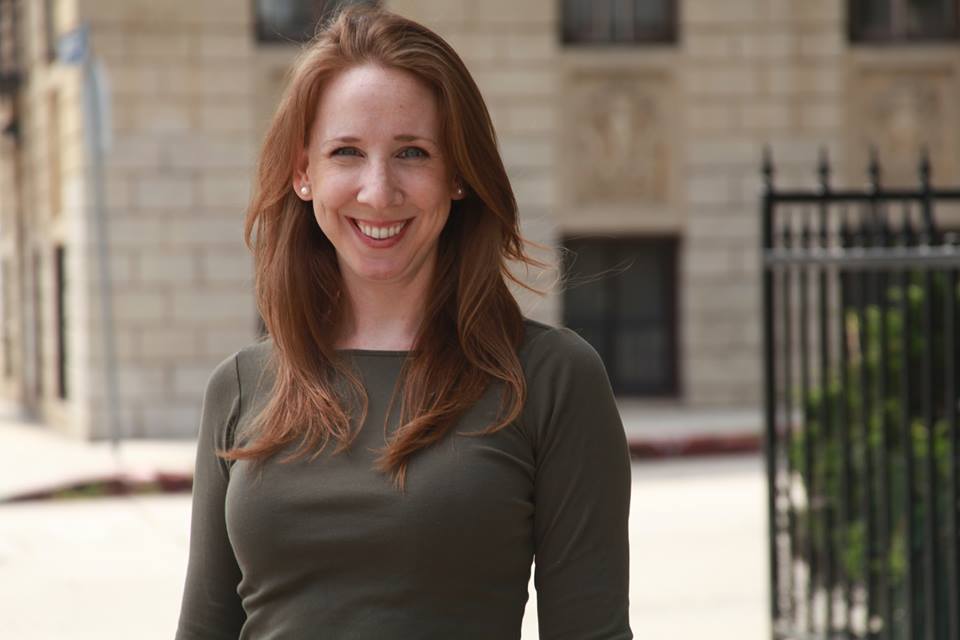
    Hi! I'm Christie Asselin, the attorney behind the Law Office Of Christie Asselin. Welcome to my blog on wills, trusts and administration. Welcome! Questions? Drop a line anytime! 

      Email me

    Submit

    Archives

    June 2023
    January 2023
    June 2022
    May 2021
    January 2021
    December 2020
    October 2020
    August 2020
    October 2019
    July 2019
    May 2019
    February 2019

    Categories

    All
    Assisted Reproductive Technology
    Estate Planning
    Parenting

    Let's stay connected!

    RSS Feed

Home

About

Privacy Policy
​Terms & Conditions

Blog

Contact

Copyright © 2020
Unauthorized use and/or duplication of this material without express and written permission from this site’s author and/or owner is strictly prohibited. Excerpts and links may be used, provided that full and clear credit is given to Christie Asselin with appropriate and specific direction to the original content.

Attorney Advertising This communication may be considered attorney advertising. Previous results are not a guarantee of future outcome.No Attorney Client Relationship The use of any content provided on this site and your provision or submission of any information while using this site will not create an attorney-client relationship between you and Ms. Asselin. Please be aware that any information that you provide by reason of your use of this site is not privileged or confidential. The content of this site is provided solely for informational purposes: it is not intended as and does not constitute legal advice. The information contained herein should not be relied upon or used as a substitute for consultation with legal, accounting, tax, career and/or other professional advertising.
  • Home
  • Podcast Episodes
  • Estate Planning
  • Trust Administration
  • Probate
  • FAQs
  • About
  • Contact
  • Blog
  • Accessibility